Regional Variations in Preferred Transaction Methods for Funding Accounts on International Poker Networks
Viktor Koch · Sep 6, 2026
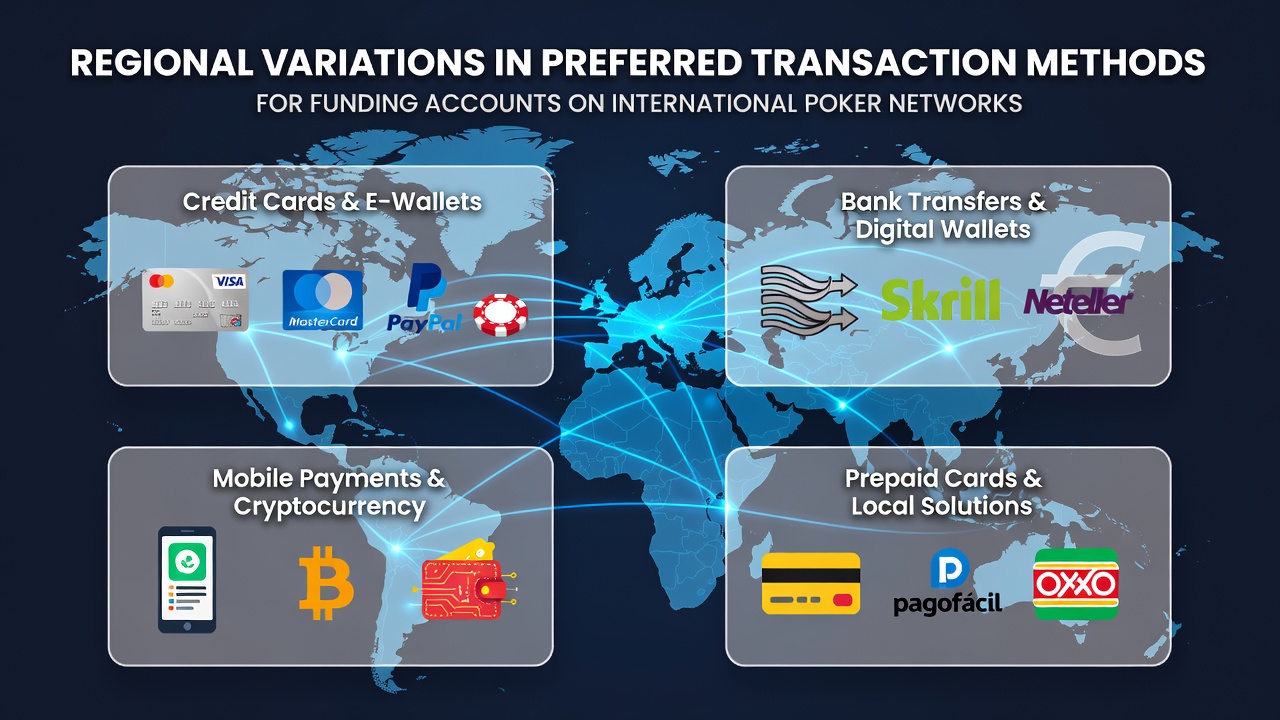
Regional Variations in Preferred Transaction Methods for Funding Accounts on International Poker Networks
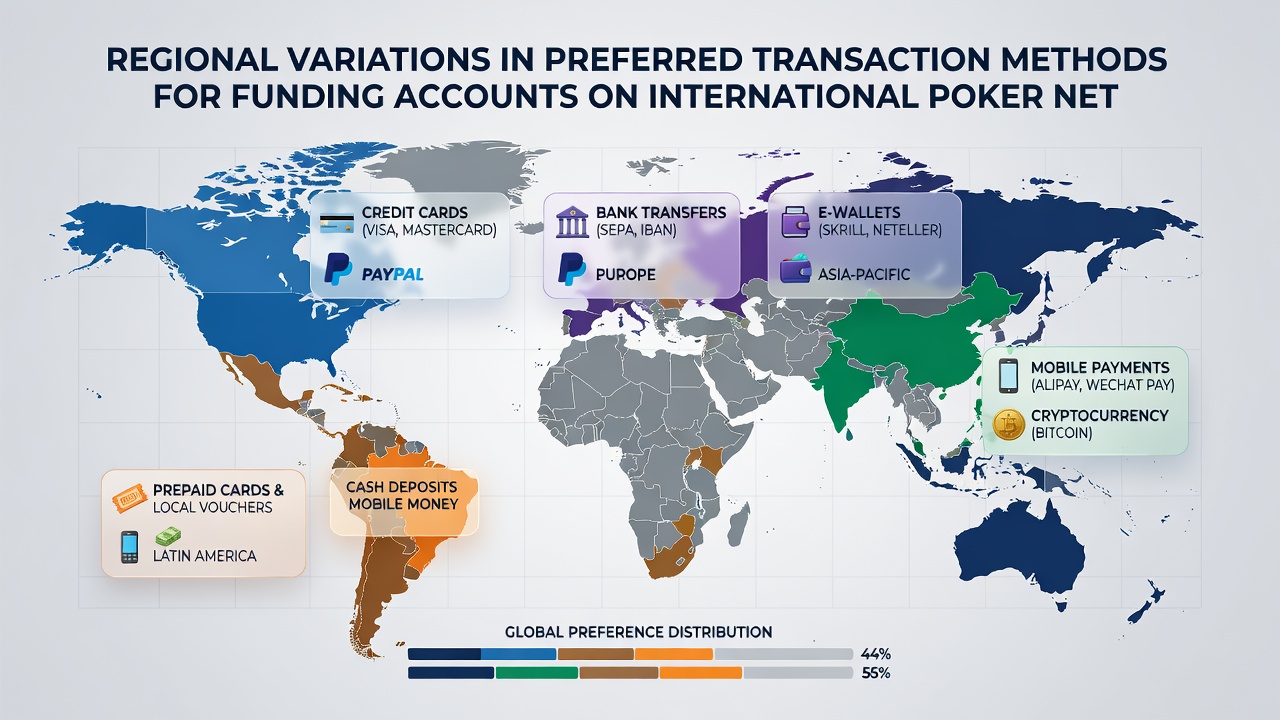
International poker networks handle player deposits through a mix of traditional banking channels, digital wallets, and emerging digital currencies, yet the dominance of each method shifts sharply from one region to the next. Data compiled in the first half of 2026 shows that North American players still lean heavily on credit and debit cards while participants in parts of Asia and Eastern Europe route the majority of their funding through cryptocurrency wallets. These patterns emerge from local banking rules, tax reporting requirements, and the maturity of electronic payment infrastructure rather than from any single operator policy.
North American Deposit Patterns
Players based in the United States and Canada continue to favor credit and debit card transactions for initial deposits on major networks. Figures released by the Nevada Gaming Control Board in September 2026 indicate that card-based funding accounted for roughly 62 percent of all real-money poker deposits processed through licensed platforms operating in the state during the preceding quarter. E-wallet services such as PayPal and Skrill captured an additional 25 percent, while bank wire transfers and cryptocurrency each remained under 10 percent. Canadian provinces display similar ratios, although observers note a gradual uptick in Interac e-Transfer usage among players in Ontario and British Columbia since the province-wide regulatory framework took effect.
European Preferences and Regulatory Influences
Across much of continental Europe bank transfers and established e-wallets remain the primary deposit vehicles. In Germany and the Netherlands, SEPA instant transfers now represent the fastest growing category, according to transaction logs shared by several international networks. Meanwhile, players in Southern and Eastern Europe show higher adoption rates for prepaid voucher systems and local mobile payment apps that interface directly with national banking apps. These choices align with the European Central Bank’s ongoing emphasis on reducing cross-border card fees and promoting instant payment schemes that operate within the eurozone.
Asia-Pacific Trends
Markets in the Asia-Pacific region present a more fragmented picture. In Australia and New Zealand, players predominantly use POLi and BPAY services that link directly to local bank accounts, while cryptocurrency deposits have grown steadily but still trail traditional methods by a wide margin. Data shared by the Australian Communications and Media Authority highlights that POLi transactions represented 48 percent of poker funding activity among Australian residents in the second quarter of 2026. In contrast, markets such as South Korea and parts of Southeast Asia demonstrate stronger cryptocurrency penetration, driven by capital control considerations and faster settlement times that appeal to frequent tournament participants.
Latin America and Emerging Markets
Latin American players rely on a combination of local bank transfers, boleto bancário in Brazil, and expanding e-wallet options such as Mercado Pago. Networks report that boleto remains the most reliable method for first-time depositors in Brazil because it bypasses credit card authorization hurdles that often block international gambling transactions. In Mexico and Colombia, debit card and SPEI instant transfers dominate, yet operators have begun integrating stablecoin options to accommodate players who face currency volatility. These adaptations mirror broader regional shifts toward digital payment rails that operate independently of legacy card networks.
Cryptocurrency Adoption Across Borders
Global cryptocurrency usage for poker funding continues to rise, yet its regional weight varies dramatically. Networks tracking September 2026 activity report that Bitcoin and stablecoin deposits now exceed 30 percent of total volume among players in Eastern Europe and certain Latin American jurisdictions, while the same methods account for less than 8 percent in Western Europe and North America. The difference stems from local banking restrictions, tax treatment of digital assets, and the speed at which cryptocurrency transactions clear compared with traditional wires. Many networks have responded by offering instant credit for stablecoin deposits, which reduces the friction that once deterred players during peak tournament registration windows.
Impact of Processing Speed and Fees
Transaction speed and fee structures further shape regional preferences. In regions where card issuers impose high cross-border fees or lengthy authorization delays, players migrate toward methods that deliver instant account credit. Conversely, markets with mature instant bank transfer systems show slower cryptocurrency growth because the cost and speed advantages are less pronounced. Industry reports compiled through mid-2026 consistently link higher retention among frequent players to the availability of low-fee, same-day funding options rather than to any single payment brand.
Conclusion
Regional preferences for funding international poker accounts reflect the intersection of local banking infrastructure, regulatory frameworks, and player demand for speed and cost efficiency. North American markets continue to center on cards and established e-wallets, European players favor bank transfers and SEPA rails, while Asia-Pacific and Latin American regions display greater diversity that includes local bank instruments and cryptocurrency. These patterns evolve alongside changes in payment technology and regulatory updates, yet the underlying drivers remain tied to the practical realities of moving funds across borders in real time.